More capacity.
Better work.
Same team.
The projects that keep sliding, the growth you couldn't staff, the quality that slipped while everyone was stretched — none of that is a strategy problem. It's what's left after your people run out of hours. An AI operating system takes the repeatable weight off your team, so the work that's left is the work only they can do — and it comes out better, not just faster.
Stop guessing. Start leveraging.
Whether you're one office or twelve departments, the same things go wrong. Here's the difference a clear, practical plan makes.
The Old Way
The New Way
Find → Build → Embed
Three phases, every time. Each one stands on its own and earns the next.
Find
Find what's actually worth building. Interviews, a workflow review, a map of the tools you already pay for, ranked opportunities, and real hours and dollars on where the leaks are.
Build
Build it into how you already work. Built for you, or built by your team with me guiding. Always from the roadmap — never from a tool list.
Embed
Make it how the work gets done. The part everyone skips: training past the learning curve, adoption support, refinement, and new modules as the business changes.
AI isn't a tool you pick up and put down
Built into your workflows, AI does what a one-off tool never will — it automates tasks off your plate, learns to get better as it goes, and advises your team from the full breadth of what it knows. From a free AI Opportunity Call to a full done-for-you AI operating system, there's a way to work together at every level.
Free AI Opportunity Call
A free 30-minute call to find the tools and software you already pay for, how to get more out of them, and simple AI workflows you can put to work right away.
Keynote & Workshop
A practical AI talk or hands-on workshop for your team, organization, or event.
AI Implementation Roadmap
A plain-English review that maps where AI creates the most leverage in your business.
Custom AIOS Build
Done-for-you AI operating layer built around how your business actually works.
What an AI operating system actually does
It isn't software your team opens. It's a layer that sits on top of the tools you already use — your CRM, your calendar, your inbox, your files — that knows how your business works and does the repeatable work between them.
The problems only a system can solve
These aren't things you fix with another subscription. They're what becomes possible when the intelligence layer knows your whole business instead of one corner of it.
Knowledge that doesn't walk out the door
When your best person leaves, twenty years of judgment usually leaves with them — the exceptions they knew to make, the customers they knew to handle differently, the reasons behind how things are done. An AIOS captures that as they work, so it stays with the business. The next person inherits it on day one instead of rediscovering it over two years.
One standard, whoever picks up the phone
Two people in the same role, two different sets of clients, two different levels of service — not because one is worse, but because they're working from different knowledge. When both run on the same system, with the same context and the same connections behind them, your standard stops depending on who happened to answer.
Goals that report on themselves
Leadership sets targets, then someone spends a week each quarter working out where things actually stand. An AIOS is connected to the departments and to the systems those departments work in, so progress reports itself continuously. You see the current state, not last month's — and you see a problem while there's still time to do something about it.
Answers that span everything at once
"Which services actually made money last quarter, and which customers are worth keeping?" That question touches your CRM, your invoices, your calendar and your job records at the same time. A tool can query one of them. A system connected to all of them can answer the question you actually asked.
It knows what "unusual" means here
Not a generic alert threshold — your business's own rhythm. Your seasonality, your normal week, your typical close rate. When something starts drifting, you hear about it early, because the system has watched your patterns long enough to tell the difference between a slow Tuesday and a real problem.
It gets better the longer it runs
Every recommendation it made, whether you took it, and what happened afterwards — kept. Month twelve is smarter than month one because the system has your history, not just your data. That's the difference between software you rent and a system that compounds into something a competitor can't buy.
Nothing runs on its own unless you said so
Every build defines three lists, in writing, before anything goes live: what runs on its own, what the system prepares for you to approve, and what stays entirely human. Nothing touching money, contracts, or a person's record ever acts unreviewed. You decide where each line falls before I build a thing.
Your data stays yours
A third of business owners now name data security as the reason they haven't gone further with AI — up from a quarter a year ago. Here's my answer, in writing, before you ask.
A 6-step process for installing AI into your business
Discovery
Owner and team interviews, system shadowing, and workflow review to understand the real business first.
Build the roadmap
Synthesize findings into a plain-English plan — what to keep, enhance, automate, or save for later.
Build remotely
Build the business context layer, structure key data, and create your first practical AI modules.
Live install
Install and configure the AIOS on-site or live with your owner and key team members.
Launch & training
A quick-start guide and role-based training so your team adopts it — not just installs it.
Ongoing modules
Add new micro-systems over time: intake, reporting, dashboards, reconciliation, and more.
I wear a lot of hats. I know I'm not the only one.
Running a business means being five people at once, and most days there isn't enough of you to go around. That was my life too — until AI changed how I work.
It didn't just make me faster. It let me take on work I would have turned down two years ago, and the results came out better, not just quicker. That's the part people don't expect: done properly, this doesn't lower your standard to save you time. It raises it.
Then I started looking at how other businesses were operating — the same repetitive work, the same information stuck in one person's head, the same good people spending their days on things a system should handle. And I thought: they should have this too. It's an unfair advantage, and I'd rather everyone had it.
The catch is that AI is easy to start and easy to get wrong. Most of what gets built in a hurry is abandoned within months — the automation nobody trusts, the tool nobody opens, the project that quietly stops. What I'm really selling is the difference between AI you use for a few weeks and AI your business still runs on next year.
I've learned how to do this well. My whole job is making sure what you build today is still working for you long after the novelty wears off.
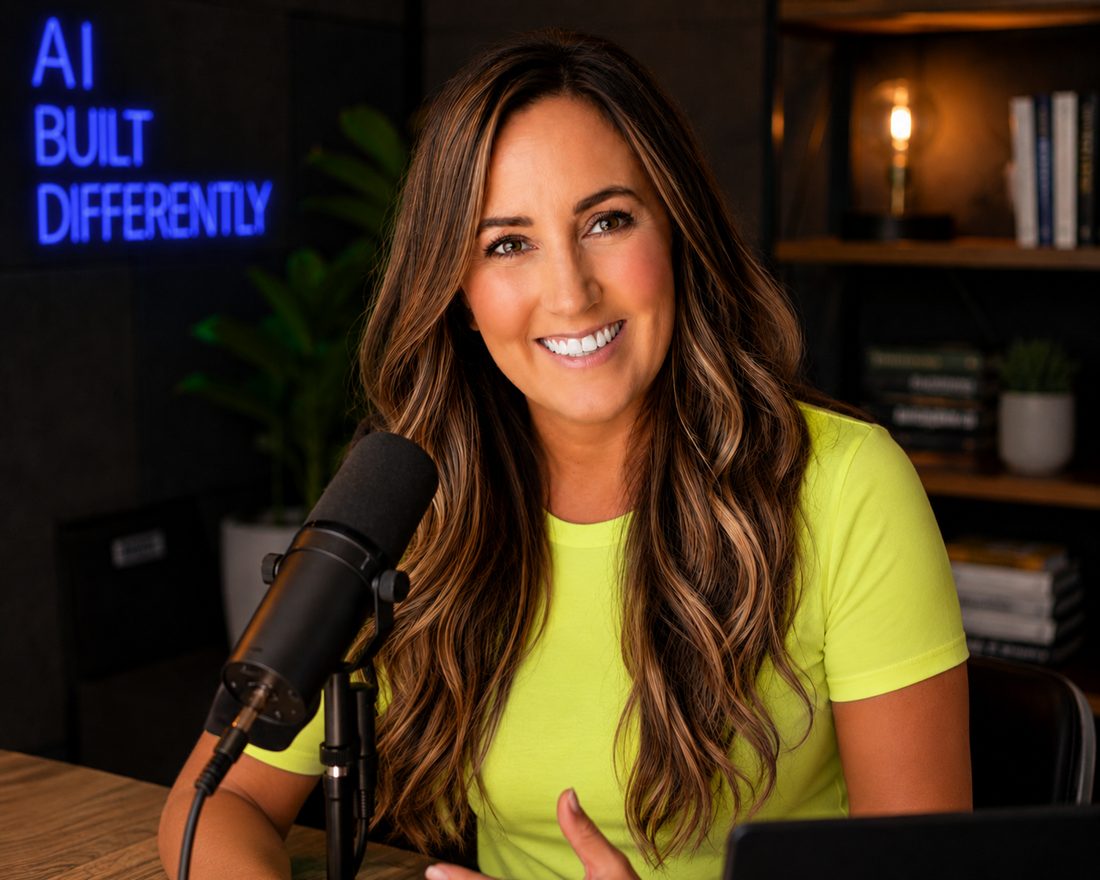
Ready to find your highest-leverage wins?
Start with an AI Implementation Roadmap and get a clear, prioritized roadmap for where AI fits inside your business.
Common questions about done-for-you AI
It depends on what you’re running, and I’d rather quote you honestly than quote you fast. For a single-site business — one location, one team, roughly 25 people or fewer — builds start at $2,500 plus a monthly, and the tiers are published. For multi-site or multi-department operations, four things move the number: how many teams and locations, how many people need training, how many systems have to connect, and how much of the build you want to own. You get your number after the roadmap, quoted against your real workflows, in fixed-price phases you approve one at a time. A free 30-minute AI Opportunity Call comes first, at no cost.
Done-for-you AI means I design, build, install, and train your team on the systems myself — you never touch the tech. Instead of buying tools and figuring them out, you get working automations like call handling, instant lead follow-up, review generation, and dashboards wired into how your business already runs.
Two ways. I build around your business instead of reselling one generic platform, and every module gets a target number it has to hit — calls answered, leads converted, hours freed, dollars recovered — measured against your baseline, with your actual results shown at day 90. Anything not moving its number gets fixed, rebuilt, or replaced.
Everything I build sits on top of the tools you already own and administer — I don't move your data somewhere you can't see it or take it back. Your data never trains anyone's AI model, and that setting is documented in writing. You get written data-handling terms at the start of every engagement, access is scoped to what each module actually needs and removed when we're done, and every build states in writing what's automated, what needs your approval, and what stays fully human.
Yes. You never touch code or complicated setup. Everything is explained in plain English, and I build, install, and train your team on it for you.
Yes. CheyonAI is a full implementation partner, not just an advisor. The roadmap gives you a clear plan, and when you're ready I design, build, install, and train your team on the system myself.
CheyonAI serves service and professional businesses across the Magic Valley in southern Idaho — home services and trades, real estate, clinics and med spas, and professional firms — from solo operators to larger multi-department operations. Remote engagements are available beyond the area too.
Most roadmaps surface quick wins you can apply within the first 30 days, alongside a 60/90-day roadmap for bigger gains. Because every module is measured against your pre-install baseline, you see actual results — not estimates — by day 90.
About CheyonAI
CheyonAI is an AI consulting and automation firm based in Burley, Idaho, serving small and mid-sized businesses across the Magic Valley — home services and trades, real estate, clinics and med spas, and professional firms. I build done-for-you AI systems that answer calls, follow up with leads, and automate the busywork, so local businesses recover revenue and free up hours. Founded by Cheyanna Hurst. Remote engagements available beyond the Magic Valley.